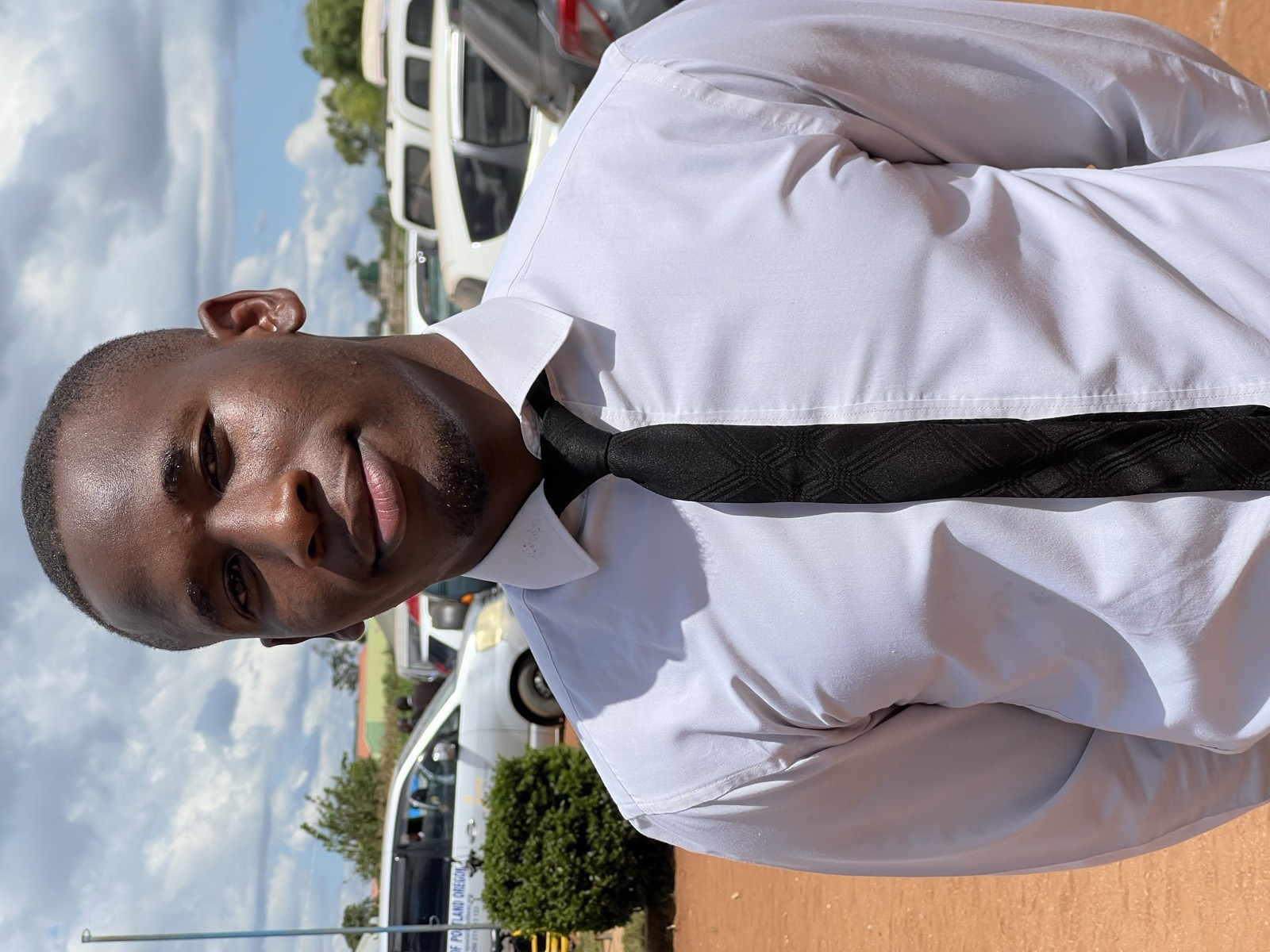
From my first lines of code in Harare to leading a development team and
shipping AI products — this is where I write about the road so far, and
where it's going.
I believe every developer's story is worth telling — not because the code is
interesting, but because of why we build.
I build for the student who deserves better tools, for the patient who needs
answers, and for the team that trusts me to lead them. These posts are honest
notes from that journey.
OriginsChapter 01
Where It All Started
My journey into software began in Harare, Zimbabwe, with a curiosity I couldn't
switch off. I wanted to know how things worked — not just how to use technology,
but how to make it. That curiosity took me from HTML and CSS
pages that barely held together, to C and C++ where I learned how computers
really think, to Python and PHP where I discovered I could build things people
actually use.
I made it formal with a Diploma in Software Engineering from TelOne
Centre for Learning, completed in 2025 — and I'm now working towards
the Microsoft Certified: AI Agent Builder Associate.
The turning point was realizing that code isn't the goal — it's a lever. In a
place where resources are stretched, one developer with a laptop can build a
system that serves an entire school. That idea never left me.
LeadershipChapter 02
Becoming a Team Leader at Mirilax
Joining Mirilax Instructional Technology changed how I see
engineering. Writing good code is one thing; helping a whole team ship good
code is another skill entirely. As Developer Team Leader, I learned to review
without crushing, to plan without over-planning, and to take responsibility
when things break — because they do break.
At Mirilax we build instructional technology — platforms like MiriLearn and
Lernify that put structured, engaging learning in front of students. Leading
that work taught me that the best architecture decision is the one your team
can actually maintain at 2 a.m. before a deadline.
AI & EdTechChapter 03
Building an AI-Powered School Management System
Schools run on paper, spreadsheets, and heroic administrators. I wanted to
change that. Our AI-powered school management system handles the
administration — records, reporting, performance insights — and uses AI to
surface what matters: which students need help, and where teachers' time is
being wasted.
The hardest part wasn't the AI. It was designing something a busy school
secretary would want to use on a Monday morning. That's where
full-stack really means full-stack: from the database schema all the way to
the empathy in the interface.
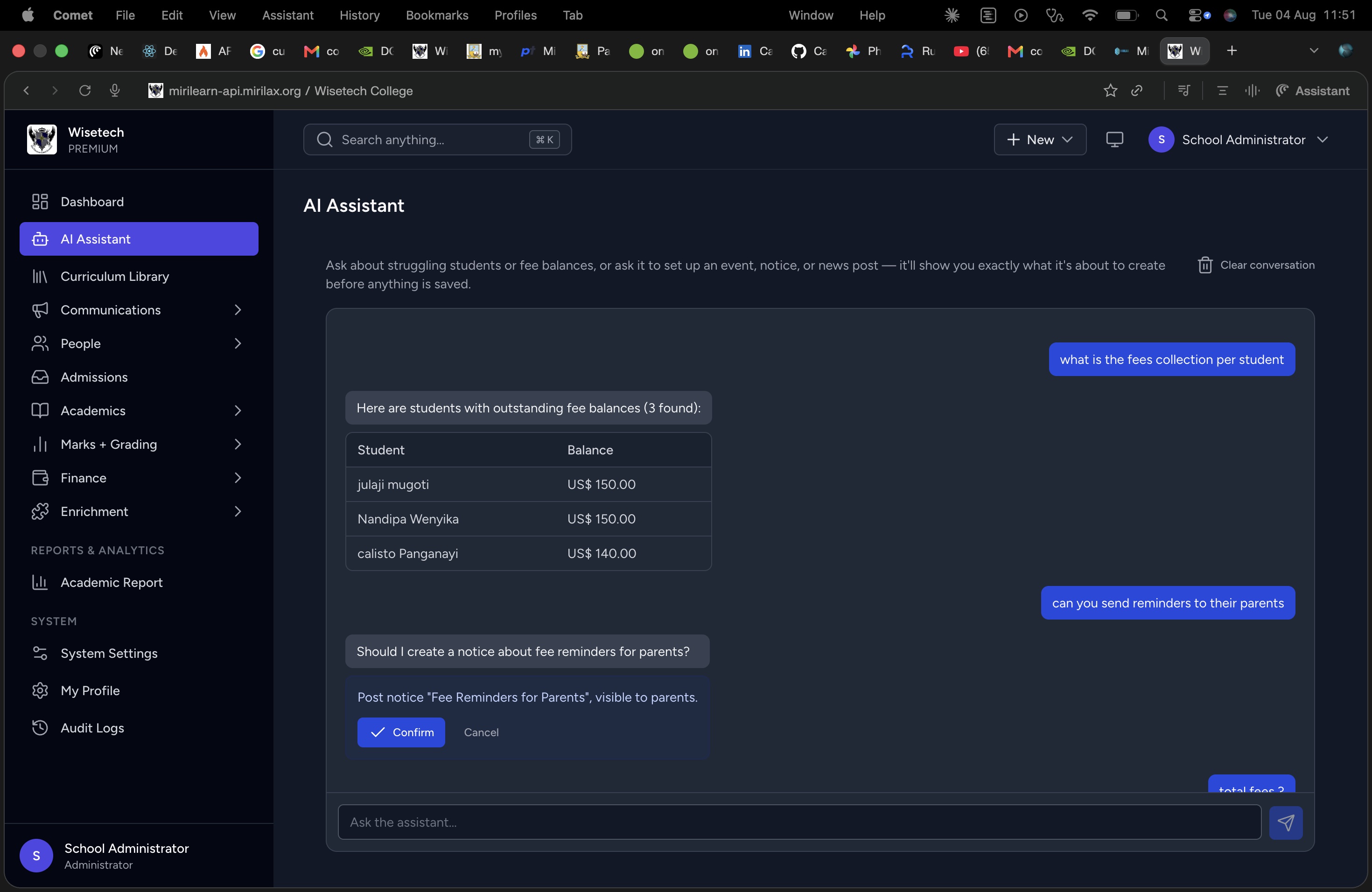
The built-in AI assistant: ask about fee balances in plain English, and it finds the students and offers to notify their parents — with a human confirming before anything is sent.
HealthTechChapter 04
Chiremba AI — A Doctor Closer to Everyone
"Chiremba" means doctor in Shona. In Zimbabwe, seeing one
isn't always simple — distance, cost, and queues stand between people and
answers about their health. Chiremba AI is my attempt to shrink that distance:
an AI medical assistant that gives people reliable first-line health guidance.
Building in health tech demands humility. The system has to know what it
doesn't know, and hand people to real professionals at the right moment.
Getting that boundary right taught me more about responsible AI than any
tutorial could.
New HorizonsChapter 05
Going International with Honadigital
Today I also work as a developer with Honadigital, a digital
display solutions company operating between Harare and London. Honadigital
turns attention into experiences — LED screens, digital billboards, and
cloud-managed content that make brands impossible to ignore.
Working across two markets sharpened me. The software behind digital signage
has to be reliable enough to run unattended on a street corner and flexible
enough for a client to update from anywhere. It's a different kind of
engineering discipline, and I love it.
What's NextChapter 06
Where I'm Going
I'm doubling down on what I believe in: AI that serves people who
need it most. Smarter education tools. More accessible healthcare.
Software built in Africa that competes anywhere in the world.
If any part of this journey resonates with you — whether you're hiring,
building, or just starting your own path in code —
reach out. The best
chapters are written with other people.